Interaction & Behavior
Fitts's Law
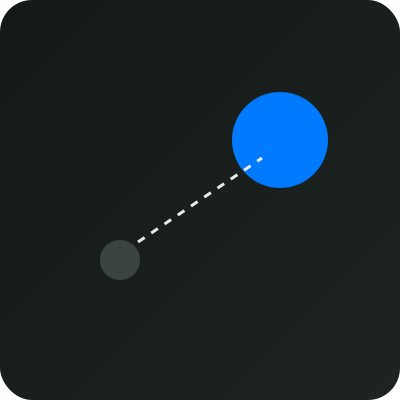
Time to reach a target depends on its size and distance.
In practice
Takeaways
- 1
Primary actions should be large and easy to acquire.
- 2
Place frequent controls near the user’s likely focus area.
- 3
Separate destructive actions from primary ones.
Origins
Paul Fitts modeled human movement as a tradeoff between distance and target size. In digital interfaces, the same relationship applies to cursors, thumbs, and styluses.
Small or distant controls increase error rates and slow completion times, especially on touch devices.
Design Applications
- Use at least 44px touch targets for key actions.
- Keep primary buttons wide enough for confident tapping.
- Put frequent actions in thumb-friendly zones on mobile.
Frequently Asked Questions
Further Reading
Related Principles
View all ›
Cognitive Load & Decision Making
Hick's Law
Decision time grows with the number and complexity of choices.
Learn more ›
Interaction & Behavior
Doherty Threshold
Productivity peaks when system response stays under ~400ms.
Learn more ›
System Design Principles
Jakob's Law
Users expect your site to work like others they already know.
Learn more ›Tools worth a look
Some links are affiliate links — see disclosure.